

Before and after our recent trip to Normandy (on Uniworld’s SS Joie de Vivre) we spent some time in Paris. Mostly walking around, with a number of stops in cafes. I thought the best way to convey the feeling of Paris would be with pictures and occasional observations. So here goes.


We did visit Versailles to see the private apartments of the royal family. It was terribly crowded.


We enjoyed a walking tour of the Latin Quarter (5), the historic center of Parisian university life.


We found our way to the historic Jewish district and a Yiddish deli. Excellent pastrami!


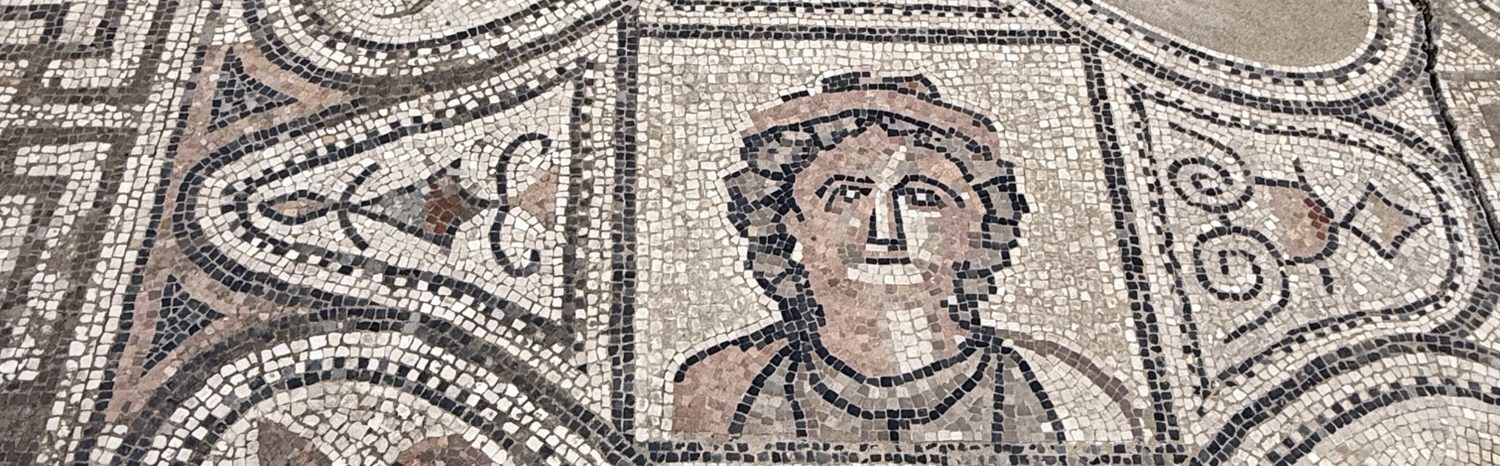
We learned it’s important to look both up and down when walking around – Paris has a few surprises. The French street artist known as Invader installed mosaic tile art throughout Paris. His artwork first appeared in the 1990s and is inspired by early video games from the ’70s and ’80s. He has expanded to other major cities around the world – but none more prolific than Paris where 1,000 installations can be found. Kids enjoy hunting for the images and you can buy books and maps with their locations.


Ememen is another French street artist working throughout Europe. His specialty is filling in cracked sidewalks and pavement. He works at night in disguise; word is he’s coming to the US, so keep your eyes open.

Notre Dame did not look ready to open. But since we’ve been home, they rang the Cathedral bells for the first time since the 2019 fire – we just missed it. It is now scheduled to reopen on December 8th, 2024.

In honor of celebrating our anniversary later this month, we also indulged in a couple of very touristy endeavors. We went to the top of the Eiffel Tower and had flutes of champagne. This involved huge crowds (even with advance purchase tickets) and me hugging the walls since I’m not a fan of heights. I stepped forward briefly for our toast shown below. We also got a kick out of the energetic show at the iconic Moulin Rouge. During one of my first childhood dance recitals, we performed a can-can routine – so I could not resist seeing it done in Paris.


We drove into Honfleur by a scenic route from Caudebec where our Uniworld ship was docked. Caudebec was the home of Victor Hugo (who wrote Les Misérables and the Hunchback of Notre Dame in case you forgot). All along the route, we enjoyed seeing many of the thatched-roof houses for which the area is known. And then we arrived in Honfleur on the Seine estuary.

Honfleur was spared during the war and in addition to having a lovely seaside setting, is an intact medieval village. Today it’s also an artists’ colony and is packed with shops, galleries, antiques, museums, and cafes. I loved it. I also need to thank our friend Amy O. for telling us about this wonderful part of France. After hearing her description and seeing her pictures, I had to visit.


Any town dating from the Middle Ages has a lot of history and we enjoyed learning more about the area on a walking tour. Originally built for trade, today’s industry centers on tourism. We spent the rest of the day strolling up and down the narrow streets. Finding the next meal always seems to be on my mind and there are so many enticing options it was hard to choose. We finally settled on one where I enjoyed mussels and frites while Fred had fish soup. Once fortified, we were back out exploring. The morning haze had lifted and we had some lovely blue sky among the drifting clouds.

Monet’s mentor, Eugène Boudin, was born here and the area was a magnet for impressionist painters. The village became known for its changing light conditions. The different light and reflection from the water would change the colors of buildings, creating an enticing opportunity for artists. There is a museum with Boudin’s work (aptly named the Eugène Boudin Museum) and others who were captivated by this lovely setting.
Honfleur is definitely one of my favorite stops on this itinerary. I could easily spend a few days here.


There is not much fishing these days, but the fishing boat shown here unloaded their nets on the dock. A man watching picked up a starfish from among the shells and seaweed. Finally, he released it back into the water. Just in time, because I was trying to decide how I was going to mount a rescue effort.
If you enjoyed this post, you might like to visit Monet’s Giverny.


In Remembrance: The Beaches of Normandy
We selected this Uniworld trip because it included a visit to the beaches of Normandy, where so many gave their lives in the name of freedom. For those of us with fathers who fought in World War II, this visit was emotional and very special. It didn’t matter what part they played in the war or if they were part of the Normandy Invasion.
It was a long day to and from our port where the SS Joie de Vivre was docked in Rouen. Our all-American group was visiting the three American sites. It was cold with grey, cloudy skies and somehow seemed appropriately somber.

We began at Utah Beach and the nearby village of Sainte-Mère-Eglise, where an incoming American paratrooper was famously caught on the steeple of the church. A monument to him is permanently in place as is the beautiful stained glass in the church commemorating the airmen. The Airborne Museum was crowded with French children and their parents during their fall break. The three parts of the museum provided very visual representations of the invasion and the men who fought and died. Ultimately the Americans freed this village from Nazi occupation.


Our next stop was Pointe du Hoc, where so many Army Rangers lost their lives scaling the cliffs directly into German fire. The information reported by the surviving Rangers about the location and condition of German artillery was key to making the landing a success.
This invasion took three years to plan and being here, it’s hard to comprehend the scope and details. It’s also hard to believe they kept it a secret. So many things went wrong, from the bad weather, missed landing site, tanks sinking, and thousands of lives lost – it’s a miracle they prevailed. But they did prevail, and as we all know, it was the turning point of the war.


We concluded our tour with a visit to the American cemetery and the landing site of Omaha Beach. The cemetery is a beautiful, magnificently maintained tribute to the men who died here. Families were able to make the choice of bringing them home or burying them where they died. Forty percent chose this cemetery, which also honors those missing in action.
I didn’t realize until our visit that all these sites are American property, having been given to the U.S. by the French government. The individual who manages the cemetery even has diplomatic status.


At Omaha Beach, Uniworld arranged a ceremony at the base of the beach-side monument and gave us each a perfect white rose. To begin, a bugler played our national anthem. As we turned and faced our flag, we joined in song and the man standing behind me had the most beautiful voice. One of our guides read a letter she had sent a former Uniworld guest. It was an absolutely beautiful, moving, tribute from a French woman in thanks to Americans. I can’t begin to describe it here. I don’t believe there was a dry eye among us. The bugler played taps and we had a moment of silence before placing the white roses as we wished. We walked ours out as far as we could into the tidal area.


Rouen is the capital of Normandy and a pretty big city with almost half a million residents. After being severely bombed during World War II, much of the town, including areas along the Seine, has been rebuilt in a very functional, concrete style. Fortunately, much of the Old Town and the main cathedral were spared damage, and we took a walking tour of that area.


The medieval area is filled with half-timbered houses, combining oak and terracotta for a storybook effect. You can see that some of the buildings have shifted as neighboring structures disappeared over the centuries. They are leaning, windows are out of kilter – there must be a fairytale somewhere about quaint houses like this.

A centerpiece of the district is the gorgeous lunar clock. It was made by the same company that created the famous clock in London’s Big Ben.


Joan of Arc was burned at the stake here. I did not find her monument to be particularly photogenic, but her story was engaging.

The cathedral is massive and has foundations from the 4th century. It took hundreds of years to build. For me, it was like seeing visuals ripped from the pages of Ken Follett’s Pillars of the Earth.
We continued walking around and exploring the area on our own. I tried to find some of the local earthenware, and since I was disorganized, I failed! We can’t seem to get enough of baguette sandwiches and French pastry, so we grabbed a quick lunch before heading back to our Uniworld riverboat.

After dinner on board, we walked back to the Cathedral for a special evening performance. We listened to the wonderful St. Evior choir, an international group of 14 women and 10 men accompanied by organ and oboe. It was a very special experience.
BTW – I will never master the guttural French pronunciation of this city.


If you like this post you may enjoy other posts from Normandy: Monet’s Giverny and A Voyage Through Normandy.


