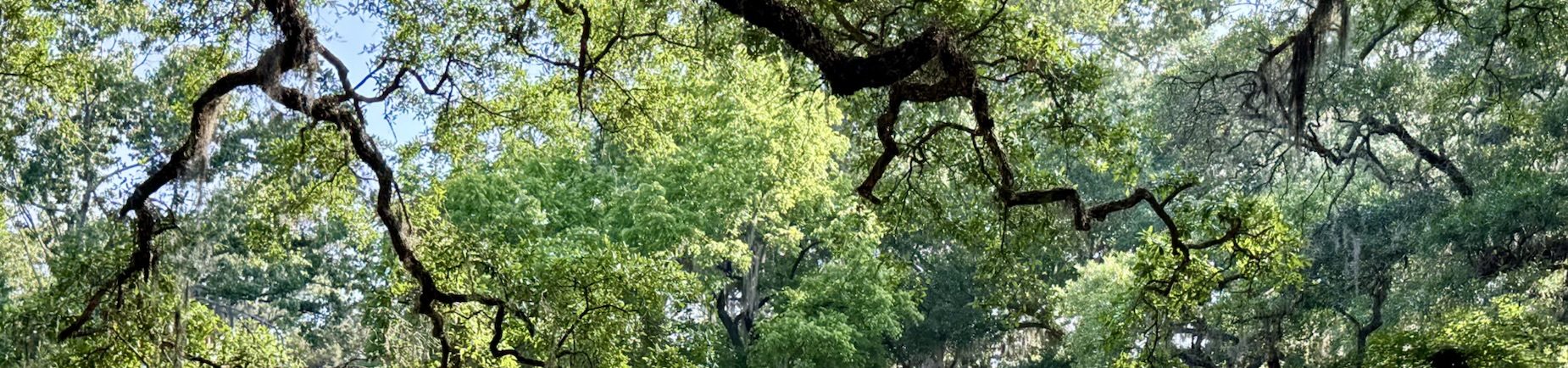


Dromoland Castle.

The Cliffs of Moher has around 1 million visitors annually.
The Cliffs of Moher were impressive, but I’d have to go with The Burren as the most fascinating place we visited today.
Cromwell’s surveyors described The Burren as “yielding neither water enough to drown a man, nor tree to hang him in, nor soil enough to bury.”
It truly is an odd, unique landscape, and does seem to hold some sort of mystical power locked within.

Landscape in The Burren.

A Portal Tomb.
Flat, smooth limestone rocks are pitted with holes. The holes are filled with water and the barren landscape is home to dozens of types of small, beautiful flowers and shrubs, many rare and unusual for this part of the world. So what at first glance is grey, barren rock, soon reveals itself with a multitude of yellows, purples, whites, and pinks.
In the midst of all this is Ireland’s best preserved Neolithic portal tomb (of more than 90), Poulnabrone, dating from about 4,000 years ago. A bit farther down the road is the best example of a ring fort, Caherconnell.
The Cliffs of Moher are dramatic, and are a very popular tourist destination. Those with more time may wish to hike the trail along the cliffs to escape the masses. There is a nice movie in the Visitor’s Centre showing all perspectives of the cliffs with great aerial and underwater photography. You can take a boat tour to see the cliffs from the water and in retrospect, I think that would’ve been a worthwhile idea.
We also spent time exploring the grounds of Dromoland, which is really a manor home as opposed to a castle. You feel very much like you are living in a Downton Abbey world. I half expected to see Mr. Barrow come around the corner, except this staff is much nicer. Servers in tailcoats at dinner, high tea, formally attired staff coming into the drawing-room to light a late afternoon fire, a chatty carriage-driver sporting a bowler and a vintage horse-drawn buggy, impressive gardens and, of course, impeccable service.
I have never been a beer drinker, but do like dark beer. In college, I was told that was very low-class . . . . but it’s working for me now, because I like Guinness.

At the Cliffs of Moher’s highest point, it’s worth the two euros for the short climb up O’Brien’s Tower (built in 1835), for a nice view and photo-op from the top.

We set off this morning on some more Irish country back roads, heading to Ballybunion to play golf on a traditional links course; in this case, the Old Course, dating from 1893.
It was a great experience and lots of fun to walk the 18 holes with a caddy. Let me tell you with some of the positions my balls landed, it was a pretty rugged walk. It was a bit chilly, but we were prepared; windy, but beautiful. Our caddy was the second person to tell us it has been a particularly bad summer here with just five decent days, this was number six.
Shockingly, walking the course made me at least feel like a better golfer.
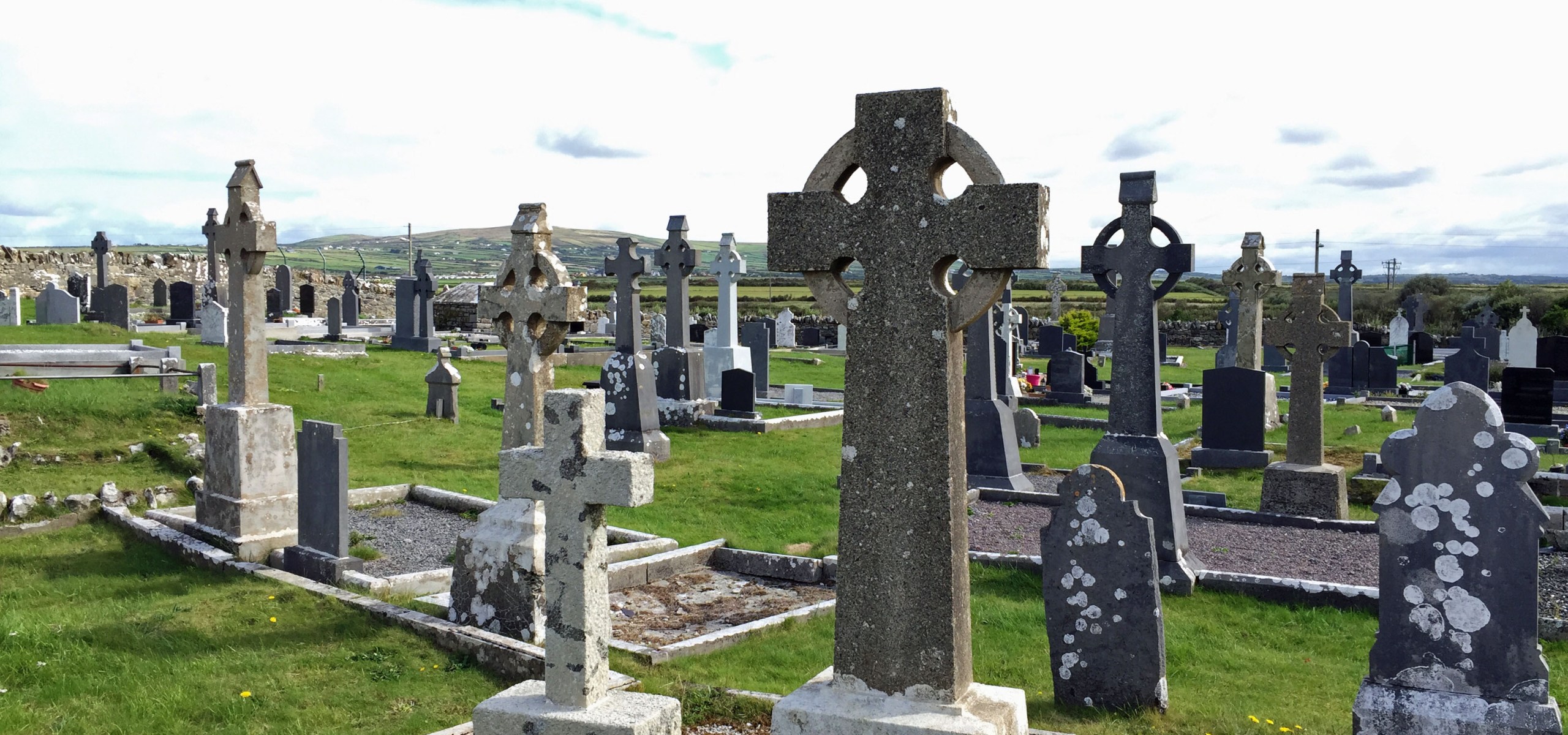
The course was spectacularly beautiful and the views on the ocean holes amazing; we were along the water for quite a few. A bonus was the adjacent cemetery along the first hole with its array of Celtic crosses. Those who have played golf with Fred will not be surprised to hear that his first ball hit a tombstone and bounced back into the fairway for an eventual par.
 Other bonuses were en route was stopping for cows to cross the road on the way to their milking. When we left Ballybunion for our drive to Newmarket on Fergus and Dromoland Castle, we found ourselves at a ferry landing, with a ferry actually arriving, so we unexpectedly took the ferry across the River Shannon and saved some time. We are really enjoying the country roads and are finding road conditions and signage much better than we expected.
More on life as royalty next post.

Tip: Great book for driving around Ireland is: Eyewitness Travel’s Back Roads Ireland. That book and a Michelin map are all you need. For any unanswered questions, everyone here is friendly and very happy to help.


The Cliffs of Kerry.

Our first day in Ireland was like an episode of Amazing Race. By the time we landed in Shannon, got the rental car sorted out, Fred reacquainted himself with shifting a car while driving in the left lane, and I figured out how to read the road signs, we were racing against time to get to our hotel before dark.
This was not, however, unexpected.
We were staying at the lovely Ard na Sidhe Country House on Caragh Lake on the Ring of Kerry. Ard na Sidhe (translates to “Hill of the Fairies”) was the dream home of Lady Gordon who built it to her specifications in 1913. Restored by its current German owners in 2011, today it’s a luxury 18-bed manor home on 32 acres of gardens and, of course, the beautiful Lake.

Ard na Sidhe.
We arrived in plenty of time to unwind in the living room (now lounge) and enjoy a gourmet dinner in elegant style on their custom Wedgewood china.
We are finally in Ireland.
Our first full day on the Emerald Isle was going to be a busy one, since we planned to see as much as we could cram into a day. You could easily stay here for a month, there is so much to see and do, but we are working with the time we have, so we got an early start. After reading as much as possible and speaking with the incredibly nice staff at Ar na Sidhe, we refined our plans a bit and headed off for the Dingle Peninsula.
This is the heart of Gaelic Ireland, and let me just say this language is impossible to make any sense of . . . see examples below.
After Checking out Inch Beach and Minard Castle, we made our way to the scenic Slea Head Drive (Slí Cheann Sléibhe in Gaelic Irish). It was absolutely beautiful and put us on the Western most point in Europe. You can see why they call this the Emerald Isle, with so many colors of green, the farm fields look like beautiful patchwork paintings.

Minard Castle, built in 1641 and destroyed by the forces of Oliver Cromwell.
The temperature is just like NC, 60s today, and the roads are lined with many of the same wildflowers we all have in our gardens – but in such profusion. Bright red giant Fuchsia everywhere, purple Thistle, orange Montbretia (Crocosmia to us), etc., all growing wild everywhere. You can smell fresh cut grass, feel a fresh breeze and see cows and sheep in pretty much every vista. There were a few brief spritzes of rain, but mostly sun and blue skies.
We had a seafood chowder lunch at Murphy’s Pub in the quaint colorful town of Dingle and then stopped in at another Murphy’s, which is a well-known local ice cream shop. They make all their own, and flavors are distinctly local (for example, their own sea salt and brown bread flavors). But what they call their “chocolate sorbet”, made with fresh Irish rain water, was the most incredible, rich, decadent, best chocolate ice cream I have ever had.
We then headed back to the Ring of Kerry (An Mhór Chuaird in Irish, see what I mean), and to the Skelling Ring, a scenic drive at the westernmost tip of the peninsula, where tours busses are not allowed. The ultimate reward, seeing the impressive Cliffs of Kerry.
Dinner was some more local seafood (garlic crab claws this time) at the Tower Hotel bar in Glenbeigh.
It’s true the roads are narrow and you do have to pull over occasionally to let the on-coming vehicle pass, but Fred got the hang of it pretty quickly. Part of the trick to driving the Ring of Kerry is to travel in the same direction as the tour buses (counter-clockwise), so you don’t encounter them as one of those on-coming vehicles. Part of the reason we are here at this time of year is so the crowds are reduced, school has started, and the summer rush is past.
To our Irish friend, Pauline – we love your country!


The very tiny flat part in the middle-top is Pulpit Rock.

Lysefjord.
Hard to believe our last port in Norway is already here . . . and again, we have been blessed with wonderful weather.
Today we walked around the Gamie Stavanger (Old Town) with its quaint whitewashed timber houses and colorful flowers. Most of the 156 buildings are private homes, so you can’t go inside, but you can walk around the winding narrow cobbled streets and appreciate the efforts to maintain this 19th century seafaring neighborhood in such prime condition.
One of the 70 canneries that was active in the 1920s now houses a canning museum in Old Town. Sardines used to be big industry here. Besides Norway taking ownership for inventing the cheese slicer (which are sold in abundance in every shop in Norway), the sardine can key was invented in Stavanger.
We booked an excursion on-line with Rødne Fjord Cruises for a trip on Lysefjord, where the famous Pulpit Rock is located. Pulpit Rock is often seen in those crazy/beautiful photos that go viral on-line, with people standing at the edge of a very, very high, flat precipice. There is no way I would ever want to be at the top of that rock, and if I was, I’d have to lay on the ground at the very back. I can’t imagine the kind of person who could sit or stand on the edge. In any case, I can say I saw it. Safely. From the fjord.
It was a wonderful trip into the Lysefjord with its dramatic cliffs, waterfalls and caves. On the way we had a nice view of the area and the wonderful summer homes that dot the coastline. Most of the homes seen today are grandfathered in, as new dwellings are not allowed so close to the water. In Norway, the public owns the shoreline.
We set sail for our return to Southampton and our flight from London to Shannon.


