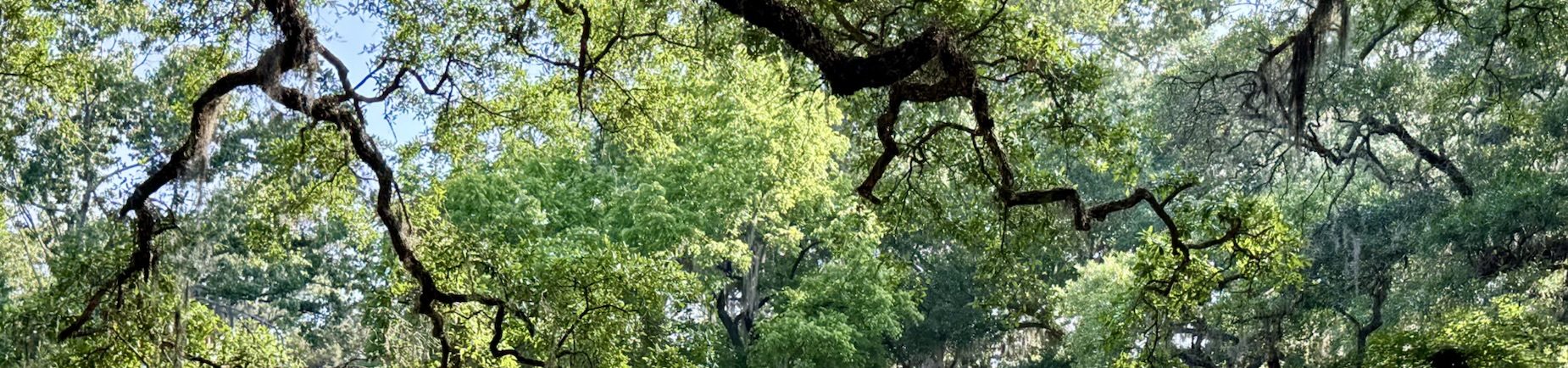


Linville Ridge Country Club.
Find out why life is great in the NC High Country. Check out my recent article in South Florida’s Pinecrest Magazine:


Crowds gather to watch the 611 roll to a stop.

In the cab of the 611, after an orientation, an engineer rides along as my husband is in command of the controls!
What do you give the guy who pretty much has everything? An experience of a lifetime.
My husband is a train-fanatic and for Father’s Day our daughter and I gave him a chance to be “At the Throttle” of the powerful, iconic 611 steam engine.
The massive engine is visiting the North Carolina Transportation Museum, on loan for a couple of weeks from the Virginia Museum of Transportation. The Norfolk and Western, Class J 611 historic engine was originally manufactured in Roanoke, VA in 1950, and was in regular service until ’59. Only 14 were ever built and this is the only engine still intact. $3.5 million was raised to restore the storied engine, and much of the work, including tests, repairs and refurbishing, was completed in Spencer at the NC Transportation Museum.
Although he didn’t get a chance to get it up to its full potential of 110 miles per hour, my husband loved feeling the power of the huge coal-guzzling machine as he chugged up and down the tracks, spewing clouds of black steam and soot, ringing the bells and blowing the deep, incredibly loud whistle.
The museum regularly offers train rides and $1 rides of the turntable at the Roundhouse, as well as many special events throughout the year. The well-preserved campus houses an impressive array of engines, cabooses and special trains as well as exhibits explaining all other forms of transportation, model trains and more.
You can see everything from a hot air balloon basket to a life-size replica of the Wright Brothers Kitty Hawk plane in the section exploring air travel. Other areas are dedicated to all manner of road vehicles from early milk wagons, vintage fire trucks, tractors, antique trucks and cars, including a well-preserved Model A, T and R and Edsel. Two-wheeled vehicles are not forgotten and fans can see all sorts of bicycles and motor cycles.
All Aboard!

Essential Info: 
NC Transportation Museum is in Spencer, in the central, Piedmont area. Museum days vary depending on the time of year. During summer months (March- October) the museum is open Tuesday through Sunday. Adults $6; Seniors & Military $5; Children 3-12 $4 and under 3, free. Admission plus Train Ride $12 for Adults; $10 Seniors & Military; $8 for Kids 3-12. Check the website for train ride times and special event details. www.nctrains.org 704.636.2889
Spencer has a district of historic shops across the street from the museum and the really cute, historic town of Salisbury is less than five minutes away.


Lightening Bugs. Fireflies. Glow worms. Whatever you know them by, flying bugs that glow and flicker in the night are magical.
For a brief period of time in June, deep in the woods, fireflies by the thousands put on their synchronized light show for visitors to the Great Smoky Mountains National Park.
Synchronized fireflies are beautiful. They really begin to flash when it is fully dark (around 9:30 this time of year) and continue for hours. You see twinkling “lights” everywhere, an expansive array of five to six flashes by each of the soaring males and then nothing for several seconds before repeating; time to let the females respond from their ground-level, dormant positions.
Fireflies are not flies at all, they are actually Coleoptera – beetles. Among the 2,000 species worldwide, we have 125 in the U.S. and several of those are found within the Park. Each species have individual characteristics for their bioluminescence and how they flash or glow.
Not every type of firefly flashes. One of my favorites is the “Blue Ghost” (Phausis reticulata) that seems to float through the night sky leaving a bluish trail of light in its wake. This striking phenomenon is thought to be the explanation behind many of the mountain ghost legends.
Smoky Mountain Field School
The University of Tennessee, in conjunction with the Great Smoky Mountains National Park Service, sponsor the Smokey Mountain Field School. Every year, from May through October, the Field School offers dozens of special, interactive programs in the Park. It’s always a great way to do something for the first time and learn the science behind what you experience. We took advantage of their annual trek to see the fireflies with UT instructor, Wanda DeWaard, who is an outdoor educator and interpretive guide.
The Smoky Mountains Park is the nation’s most visited national park and the only Park created from private property. It is 800 square miles and has a number of entrances. To get to the fireflies, you have to enter the Park at the Sugarlands entrance south of Gatlinburg, TN. Once you enter, you drive about 4.5 miles to the Elkmont entrance. During peak firefly season, the Park Service has a trolley to take visitors from Sugarlands to the Elkmont area. They also provide you with the red cellophane to cover your flashlight, so you won’t interfere with wildlife.
As is typical of Field School events, we had an eclectic group of well-educated cohorts, including an interesting entomologist, 14 in all.

A cottage in Elkmont.
Daisy Town
On our way to see the fireflies, we meandered through the area, walking among the tall Tulip Poplars and hemlocks, learning about the history, fauna and flora of the area from our expert guide.
Elkmont was made up of three small towns. As previously mentioned, the Park was created from privately owned land and the residents of Elkmont fought hard to keep leases on their land – some extending into the 1990s. Daisy Town was built in the 1920s as vacation homes, on land stripped of trees by the lumber efforts of the day. Ergo, the daisy field. Today, a few of the abandoned cottages are being restored by the Park Service and will eventually be used for visiting artists and scientists as well as available for rental.
The neighborhood’s claim to fame happened decades ago, when a big car drove into the area. Local kids were all excited to see who was in this big car. It turned out to be a guy named Walt Disney. He was extremely interested in one of the charming little cottages nestled in the woods. No one really understood why, until the movie Snow White was released and they immediately recognized the little cottage. Sadly, that cottage later burned.
Walking paths were good quality, nice and wide and followed the old railroad grade (used in the logging days), along the Little River.
We spend much of our lives trying to replicate what nature offers. Twinkling lights are enchanting (I wonder if Walt saw them).

I found the firefly spectacular impossible to capture with photos . . .
Two Interesting Facts:
- It takes 45 minutes from dusk to complete darkness; it takes human eyesight 45 minutes to adjust from a lit room to darkness.
- If you count a cricket’s chirp for 15 seconds and add 40 – you will know the temperature (F).
Footnote:
In my earlier blog comparing Branson. MO to Gatlinburg, I really should have specifically said Pigeon Forge, which is located just outside Gatlinburg. Locals definitely make the distinction. The little town of Gatlinburg has actually worked hard to keep some of its original charm with zoning regs, a trolley system to mitigate traffic, and I am glad to see the craft loop thriving. But in my mind, Gatlinburg will forever be frozen in time with those great sorority spring formals.


Alpacas after the shearing at Apple Hill Farm in Banner Elk.

Looking towards Boone, from the horse pasture at Apple Hill Farm. The bee hives in the center were some of the only productive hives in the area last year. The bee situation has improved and this year promises to be better.
The tagline for Apple Hill Farm is “A place where animals talk & people listen.”
Owner Lee Rankin was also certainly listening to some inner spirit when she followed her dream to raise alpacas and found herself buying a farm in Banner Elk, NC.
Moving to a new state, alone with her toddler son, she dug-in, bought her first three alpacas in 2002, and learned the hard way through experience and research. Those first animals were attacked; two of them and their newborns were killed by a mountain lion (locals swear mountain lions are in the area, but the State won’t confirm). One thing led to another and now the thriving herd is protected by innovative fencing, guard donkeys (they will easily fend off coyotes), working guard dogs and a herd of sacrificial goats who seem to have nothing to fear.
A hands-on owner, Lee is constantly checking on things and chatting with guests. Her other animal residents include chickens, Shetland ponies, horses, llamas and angora goats.
As visitors came to the farm, more and more people were requesting tours and the agri-tourism aspect of the farm began to fall into place. Truly “organically” grown (as they like to say in the business world today), the business has evolved and expanded based on demand.
There are now daily walking tours at 2PM, between mid-May through mid-October, as well as by appointment. Tours are $12 for adults, $7 for children, free for kids under 3, and last from 60-90 minutes depending on how chatty the group is and what’s going on. Our guide Brianne was absolutely terrific. A recent psychology graduate from nearby Appalachian State University, she has worked at the farm for several years. Her love of the animals, exceptional knowledge, and ability to handle the group were awe-inspiring.
The tour is great with children or without. I went with adult friends and we all enjoyed the day. We were in luck and got to see the annual shearing, which generally takes place on the first Saturday in June.

Alpaca wool is highly valued for softness, durability and warmth. This little fellow sports the most popular (and therefore valuable) color.
A highlight of the visit was meeting spinner/artist Joanne Lawrence who was spinning the alpaca wool by hand on a spinning wheel; calmly pumping the foot pedal as she chatted with us. She is an accomplished knitter and artisan who makes the most magical fairy dolls. We were privileged to see a couple of her works-in-progress, and now understand their curly mohair locks are made from Angora goat wool. She made it all look so easy . . . .
The Farm’s gift shop is stocked with the largest selection of alpaca products in the High Country. They have more than 20 varieties of alpaca yarn from lace to rug weight, in a wide variety of colors. In addition to the wool for the DIY crowd, there are plenty of really cute and beautiful items like socks, hats, scarves, gloves, dolls, ornaments and more for those of us who prefer some ready-made retail therapy (but, alas, not Joanne’ fairies, which are generally made to order).
Find out what other surprises are waiting at Apple Hill Farm.
Can you hear what the animals are saying?

Gumby gets a makeover during the annual shearing at Apple Hill Farm.
Just the Facts:
Apple Hill Farm, Banner Elk, NC
828.963.1662
http://www.applehillfarmnc.com

No worse for the experience, Gumby watches as the rest of the herd takes its turn with the clippers.


